




 MEMBER REWARDS

The Chemical Engineer's Guide to Zinc Oxide: Why it's the Gold Standard for Eczema and Skin Repair
For parents and individuals battling severe skin conditions, finding a barrier cream that truly protects without causing further irritation is the ultimate challenge.
When the skin barrier is compromised by eczema, contact dermatitis, or dyshidrotic eczema, the skin loses its ability to retain moisture and defend against external irritants. This leads to a vicious cycle of inflammation, weeping, and intense itching. While many turn to standard pharmacy brand zinc pastes, these often contain hidden sensitizers like lanolin, parabens, or petroleum derivatives that can exacerbate sensitive skin. As a chemical engineer specializing in cosmetic science, I have analyzed the precise mechanisms of skin barrier repair. This guide explores why zinc oxide is the gold standard for eczema management, how it functions at a molecular level, and why the formulation's pH and purity are critical for safe, effective healing.
Table of Contents
The Science of Zinc Oxide in Skin Repair
Zinc oxide is a remarkable inorganic compound that functions primarily as a physical barrier. Unlike chemical treatments that must be absorbed into the bloodstream to take effect, non-nano zinc oxide sits on the surface of the stratum corneum. This creates an immediate, breathable shield that drastically reduces Transepidermal Water Loss (TEWL), locking in the skin's natural moisture while simultaneously blocking external irritants, bacteria, and excess moisture from weeping eczema.
From a chemical engineering perspective, the efficacy of a zinc oxide cream is heavily dependent on its formulation environment, specifically the pH level. The human skin's natural acid mantle operates at an optimal pH of approximately 5.5. When a barrier cream is formulated to match this exact pH, it supports the skin's native microbiome and enzymatic processes required for lipid production and barrier repair. Furthermore, zinc oxide possesses inherent anti-inflammatory and mild astringent properties, making it highly effective at drying out the fluid-filled blisters characteristic of dyshidrotic eczema, while soothing the intense redness of contact dermatitis.
Conditions That Benefit Most from Zinc Oxide
Applying topical zinc oxide is highly beneficial for several specific types of eczema and inflammatory skin conditions, particularly those driven by moisture trapment, friction, skin barrier breakdown, or intense itching. Because zinc oxide acts as a physical moisture shield, blocks local histamine release (reducing the itch reflex), and possesses mild antibacterial properties, it is clinically favoured for managing the following conditions:
1. Irritant Contact Dermatitis
This is the most common condition that benefits from zinc oxide. It occurs when the skin's physical barrier is broken down by prolonged exposure to external chemical or mechanical irritants.
- Vulvar or Scrotal Dermatitis: The delicate skin of the intimate areas is highly susceptible to irritation from acidic urine, sweat, or residues from harsh laundry detergents. Zinc oxide creates a water-repelling barrier that isolates raw nerve endings from bodily fluids. Our Moisturising Zinc Oxide is formulated at pH 5.5 specifically to support the natural acid mantle of these sensitive areas, while its plant-based emulsion nourishes the skin rather than drying it out further.
- Diaper Dermatitis (Diaper Rash): Affecting both infants and adults dealing with incontinence, zinc oxide prevents urine and fecal enzymes from breaking down the skin. Unlike petroleum-based nappy creams that simply seal in whatever is already there, our formulation actively moisturises while providing barrier protection — critical for preventing the cracked, over-dried skin that makes diaper rash worse.
- Intertrigo (Friction Rash): Inflammation that occurs in warm, moist skin folds (such as under the breasts, in the inner thighs, or armpits) where skin rubs against skin. Zinc oxide acts as a dry lubricant, absorbing excess sweat while eliminating friction. Because Ms. Chu's Moisturising Zinc Oxide uses a breathable plant-based emulsion rather than heavy petroleum, it manages moisture without suffocating the skin folds.
2. Atopic Dermatitis (Classic Eczema)
While topical steroids or immunomodulators are used to control the deeper systemic pathways of atopic flares, zinc oxide is a highly effective, non-medicated supportive therapy:
- Soothes the Itch-Scratch Cycle: Zinc ions inhibit mast cell degranulation, which suppresses the local release of histamine. Applying it can help reduce the compulsive urge to scratch, allowing the epidermis to heal. This is one of the reasons we pair our Moisturising Zinc Oxide with our No No Itchy Gel for acute itch relief.
- Managing "Weeping" or Oozing Eczema: When acute eczema causes the skin to blister or ooze fluid, a high-concentration zinc paste acts as a safe astringent. It gently dries up the excess fluid and prevents secondary bacterial infections (such as Staphylococcus aureus) from colonizing the broken skin. A key concern for eczema sufferers is that standard zinc pastes dry out the surrounding healthy skin, worsening the overall condition. Ms. Chu's Moisturising Zinc Oxide solves this problem — its nourishing plant-based formula treats weeping and oozing while simultaneously hydrating the surrounding skin, preventing the extreme dryness that triggers further flare-ups.
3. Dyshidrotic Eczema (Pompholyx)
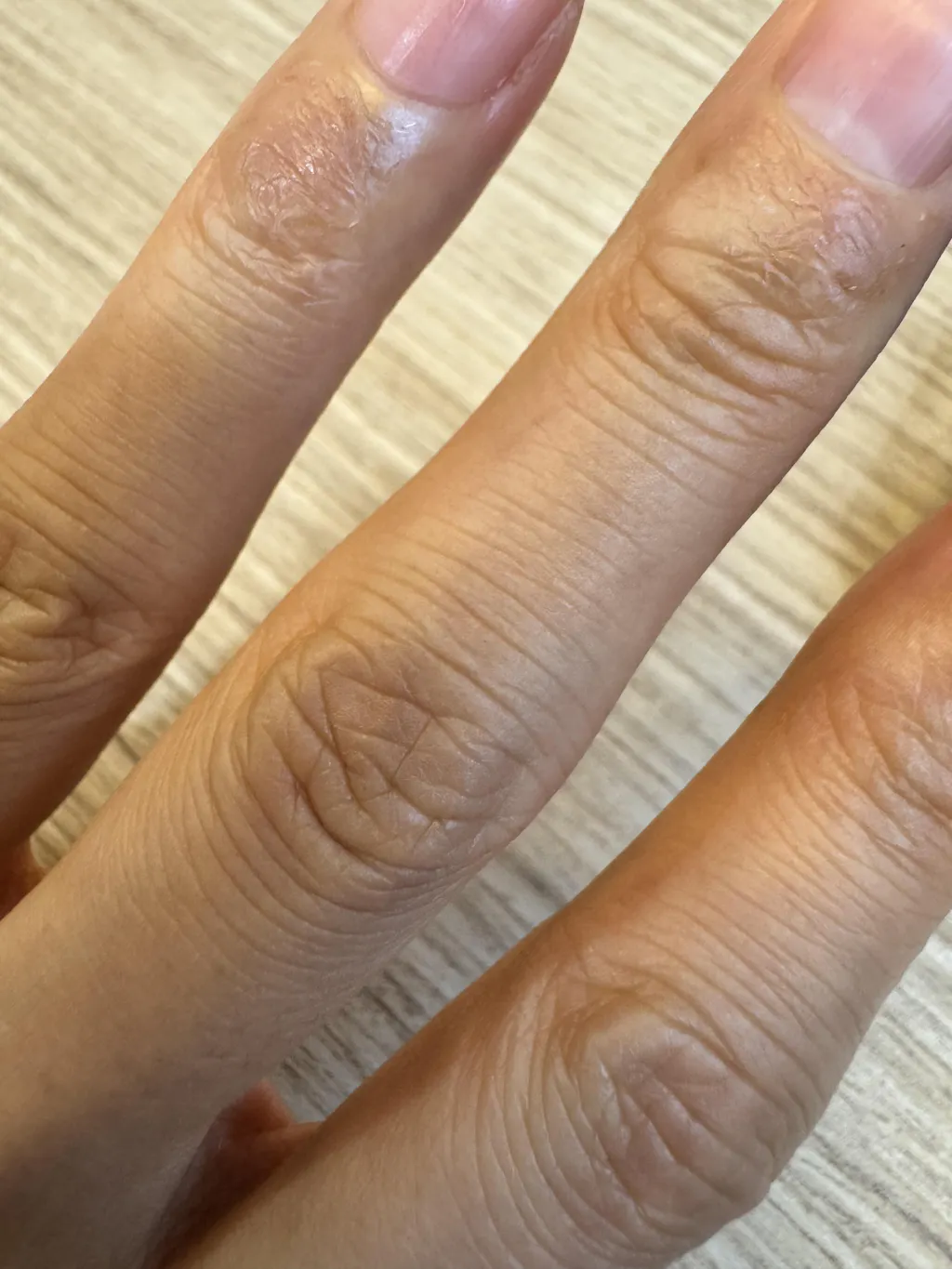
This specific type of eczema causes tiny, intensely itchy fluid-filled blisters to form on the edges of the fingers, palms of the hands, or soles of the feet. The natural astringent and drying properties of zinc oxide are excellent for accelerating the drying phase of these deep-set blisters, helping to resolve the painful flare-up faster without thinning the thick skin of the hands and feet — unlike topical steroids which can cause irreversible skin atrophy with repeated use.
For dyshidrotic eczema specifically, the moisturising aspect of our zinc oxide is crucial. The skin between blisters often becomes painfully dry and cracked. A standard zinc paste would worsen this cracking, but our formulation provides targeted astringent action on the blisters while keeping the surrounding skin supple and hydrated.
4. Psoriasis and Seborrheic Dermatitis
Inverse Psoriasis: Unlike plaque psoriasis, inverse psoriasis occurs in smooth skin folds (such as the groin or armpits) and lacks thick scales, appearing as raw, red, inflamed patches. Zinc oxide is an ideal choice here because standard heavy psoriasis ointments trap too much moisture in folds, whereas zinc controls the damp environment. Our Moisturising Zinc Oxide is particularly well-suited for inverse psoriasis because its lightweight, breathable texture manages fold moisture without the occlusive heaviness of petroleum-based alternatives, while its pH 5.5 formulation supports the compromised skin barrier in these sensitive areas.
The Ms. Chu Uniqueness: A Comparative Analysis
Not all zinc creams are created equal. Many standard pharmacy brands rely on inexpensive petroleum bases, synthetic preservatives, and potential allergens like lanolin. At Ms. Chu, we apply green chemistry principles to formulate a zinc cream that is uncompromisingly pure, utilizing a plant-based emulsion that actively nourishes the skin while providing superior barrier protection. The critical difference is this: standard zinc pastes treat the immediate problem (weeping, oozing) but create a new one (extreme dryness and cracking). Our Moisturising Zinc Oxide is engineered to do both — manage fluid while keeping skin hydrated and supple.
| Feature | Ms. Chu Moisturising Zinc Oxide | Standard Pharmacy Brands |
|---|---|---|
| Zinc Concentration & Purity | High-purity, non-nano, food-grade zinc oxide in a breathable plant-based emulsion. | Often synthetic zinc oxide suspended in heavy, occlusive petroleum or mineral oil bases. |
| Moisturising vs. Drying | Treats weeping/oozing while simultaneously nourishing surrounding skin. Plant-based emollients prevent the extreme dryness that triggers further eczema flares. | Dries out weeping areas but also strips moisture from surrounding healthy skin, often causing cracking and secondary irritation. |
| pH Level | Precisely formulated at pH 5.5 to support and restore the skin's natural acid mantle. | Often alkaline or uncalibrated, which can disrupt the skin barrier and delay healing. |
| Presence of Steroids/Parabens | 100% Steroid-free and Paraben-free. Preserved with natural, food-grade alternatives. | May contain parabens (e.g., methylparaben), BHA, or be prescribed alongside topical steroids. |
| G6PD Safety | Strict exclusion of Menthol and Camphor. 100% safe for G6PD deficiency. | "Soothing" variants frequently contain menthol or camphor, which are dangerous hemolytic triggers for G6PD. |
A Note on G6PD Deficiency
For parents of babies with G6PD deficiency, finding safe skincare is paramount. All Ms. Chu products are formulated to be G6PD-safe, free from triggers like camphor, menthol, and salicylic acid. We understand that even trace amounts of these chemicals can cause severe reactions, which is why our formulations rely strictly on safe, natural alternatives for soothing inflammation.
Product Recommendations
Moisturising Zinc Oxide Cream

This plant-based, 100% natural Hydrating Zinc Oxide Cream creates a breathable barrier to protect skin from moisture damage. It is specifically formulated to soothe weeping eczema, speed up recovery, and provide anti-inflammatory and antibacterial benefits without the use of steroids or parabens. Unlike standard zinc pastes that over-dry the skin, this cream nourishes and hydrates while managing oozing — making it safe and effective for daily use on eczema-prone skin.
All Purpose Body Lotion

An organic, rich, and nourishing humectant designed for severe eczema and contact dermatitis. Combining organic cocoa butter, shea butter, colloidal oatmeal, and calendula, this lotion provides 3X potency to heal rashes, reduce redness, and rebuild the skin's protective barrier.
Frequently Asked Questions
Is zinc oxide cream safe for daily use on eczema?
Yes, high-quality, non-nano zinc oxide is incredibly safe for daily use. Unlike topical steroids, which can cause skin thinning over time, zinc oxide works as a physical barrier on the surface of the skin. It does not absorb into the bloodstream, making it safe for long-term management of eczema and contact dermatitis.
Is zinc oxide safe for G6PD babies with eczema?
Zinc oxide is completely safe for G6PD-deficient babies with eczema because it acts as a topical physical barrier without systemic absorption. Ms. Chu's 100% plant-based, G6PD-safe zinc oxide formulation avoids harmful ingredients like parabens and lanolin, ensuring safe use on sensitive, eczema-prone skin from newborns upward.
How does zinc oxide help with dyshidrotic eczema?
Dyshidrotic eczema is characterized by intensely itchy, fluid-filled blisters on the hands and feet. Zinc oxide is highly effective for this condition because of its mild astringent properties, which help to safely dry out the weeping blisters while simultaneously protecting the compromised skin from further irritation and bacterial infection.
How does zinc oxide reduce itchiness in eczema-affected skin?
Zinc oxide reduces eczema itchiness by forming a breathable, protective layer that prevents irritants and allergens from contacting inflamed skin. Zinc ions also inhibit mast cell degranulation, suppressing the local release of histamine that drives the itch-scratch cycle. This dual mechanism makes it a gold standard in non-steroidal itch management.
Why is a pH of 5.5 important for a barrier cream?
Healthy human skin has a slightly acidic pH of around 5.5, known as the acid mantle. This acidic environment is crucial for keeping the skin microbiome balanced and preventing the growth of harmful bacteria. Applying a cream that matches this pH ensures that the skin's natural healing processes are supported rather than disrupted.
Why does Ms. Chu use non-nano zinc oxide?
Ms. Chu uses non-nano zinc oxide because its particle size prevents skin penetration, ensuring safety for eczema and sensitive skin while creating an effective breathable barrier. Non-nano particles sit on the skin surface where they are needed, rather than being absorbed systemically. This reflects our chemical engineering approach to prioritizing skin barrier health and minimizing irritation in plant-based, cruelty-free formulations.
Will zinc oxide cream dry out my eczema skin even more?
This is a common and valid concern. Standard pharmacy zinc pastes use petroleum or mineral oil bases that can indeed over-dry the surrounding skin while treating weeping areas. Ms. Chu's Moisturising Zinc Oxide is specifically engineered to solve this problem — it provides targeted astringent action on oozing areas while its plant-based emollients actively nourish and hydrate the surrounding skin, preventing the extreme dryness that triggers further eczema flares.
References
- Gupta M, et al. "Zinc therapy in dermatology: a review." Dermatology Research and Practice. 2014;2014:709152.
- Kim JE, et al. "Zinc and atopic dermatitis: a systematic review and meta-analysis." Journal of Clinical Medicine. 2019;8(2):260.
- Agren MS. "Studies on zinc in wound healing." Acta Dermato-Venereologica. 1990;154:1-36.
- Lansdown AB, et al. "Zinc in wound healing: theoretical, experimental, and clinical aspects." Wound Repair and Regeneration. 2007;15(1):2-16.


Leave a comment