




 MEMBER REWARDS

The Complete Guide to Diaper Rash: Natural Prevention & Care
Diaper rash affects up to 50% of infants at some point during their first two years, yet most cases can be prevented and treated naturally without steroids or harsh chemicals.
Few things are more distressing for a parent than seeing angry, red patches on their baby's delicate skin. Diaper rash — medically known as diaper dermatitis — is one of the most common skin conditions in infancy, and it can range from mild redness to painful, blistered skin that makes every nappy change a struggle. The good news is that with the right knowledge and a gentle, natural approach, diaper rash is both highly preventable and treatable. In this comprehensive guide, we will walk you through the causes, types, prevention strategies, and evidence-based natural remedies so you can keep your baby's skin healthy, comfortable, and rash-free.
Table of Content
What Is Diaper Rash? Understanding the Types
Diaper rash is a general term for any skin irritation that develops in the diaper area — the buttocks, inner thighs, and genital region. While it is most common in babies between 9 and 12 months of age, it can affect anyone who wears diapers, including toddlers and adults with incontinence.
Not all diaper rashes are the same. Understanding the type of rash your baby has is the first step toward effective treatment:
| Type | Appearance | Common Cause |
|---|---|---|
| Irritant Contact Dermatitis | Red, shiny patches on buttocks and thighs | Prolonged contact with urine/stool |
| Candidal (Yeast) Diaper Rash | Bright red with satellite lesions in skin folds | Candida yeast overgrowth in warm, moist environment |
| Allergic Contact Dermatitis | Red, itchy patches where product touches skin | Fragrances, dyes, or chemicals in wipes/diapers |
| Bacterial Diaper Rash | Yellow crusting, pus-filled bumps | Secondary bacterial infection (Staphylococcus or Streptococcus) |
The most common type by far is irritant contact dermatitis, accounting for the majority of diaper rash cases. This is the type that responds best to natural prevention and barrier-based treatment.
What Causes Diaper Rash?
Understanding the root causes of diaper rash empowers you to prevent it before it starts. The diaper area creates a unique microenvironment — warm, moist, and often in contact with irritants — that makes the skin particularly vulnerable. Here are the primary causes:
1. Prolonged Wetness: When urine sits against the skin for extended periods, it raises the skin's pH from its naturally acidic state (around 5.5) to a more alkaline level. This weakens the skin's protective acid mantle, making it more permeable to irritants. Research published in Pediatric Dermatology confirms that prolonged exposure to moisture is the single most significant risk factor for diaper dermatitis.
2. Stool Enzymes: Faecal matter contains digestive enzymes — particularly lipases and proteases — that actively break down skin cells. This is why diarrhoea episodes almost always trigger severe diaper rash; the more liquid the stool, the higher the enzyme activity against the skin.
3. Friction: The constant rubbing of diaper material against skin, especially during movement, can cause micro-abrasions that allow irritants to penetrate more deeply. Tight-fitting diapers or rough materials worsen this effect.
4. Chemical Irritants: Many conventional baby wipes, diaper creams, and even diapers themselves contain fragrances, alcohol, preservatives (such as parabens), and dyes that can trigger allergic or irritant reactions on sensitive baby skin.
5. Antibiotics: When babies take antibiotics — or when breastfeeding mothers do — the medication can disrupt the natural balance of gut and skin bacteria, creating conditions that favour yeast overgrowth and candidal diaper rash.
6. Dietary Changes: Introducing new foods, especially acidic fruits like citrus or tomatoes, can change the composition of stool and urine, making them more irritating to the skin. This is why diaper rash often coincides with the start of solid foods around 6 months of age.
7 Proven Prevention Strategies
Prevention is always better than cure, and with diaper rash, a consistent routine can dramatically reduce the frequency and severity of flare-ups. Here are seven evidence-based strategies:
1. Change Diapers Frequently: Aim for every 2 to 3 hours during the day, and immediately after bowel movements. The less time irritants spend against the skin, the lower the risk of rash. Studies show that increasing diaper change frequency alone can reduce diaper rash incidence by up to 50%.
2. Gentle Cleansing: Use lukewarm water and a soft cloth or fragrance-free, alcohol-free wipes. Avoid scrubbing — instead, gently pat the area clean. The patting technique is gentler on already-compromised skin and prevents further micro-abrasions.
3. Thorough Drying: Allow the diaper area to air-dry completely before putting on a fresh diaper. If you are in a hurry, gently pat dry with a soft towel — never rub. Even a few minutes of air exposure can make a significant difference.
4. Apply a Barrier Cream: A natural barrier cream containing zinc oxide creates a physical shield between the skin and moisture. Apply a generous layer at every diaper change, especially before bedtime when the diaper will be worn for longer periods.
5. Nappy-Free Time: Give your baby's skin time to breathe. Lay your baby on a clean towel or waterproof mat without a diaper for 10 to 15 minutes several times a day. This simple practice allows the skin to fully dry and recover.
6. Choose the Right Diaper Size: A diaper that is too tight increases friction and traps moisture. Ensure there is room for a finger to fit comfortably between the diaper and your baby's waist. If you notice red marks from elastic edges, it is time to size up.
7. Avoid Irritating Products: Choose fragrance-free, dye-free, and preservative-free products for everything that touches your baby's diaper area. This includes wipes, creams, laundry detergent for cloth diapers, and the diapers themselves. Look for products labelled hypoallergenic and dermatologically tested.
Natural Treatment: How to Heal Diaper Rash Without Steroids
When diaper rash does occur despite your best prevention efforts, natural remedies can be remarkably effective for mild to moderate cases. The key principles are: protect, soothe, and heal.
Step 1 — Protect with a Zinc Oxide Barrier: Zinc oxide is the gold standard for diaper rash treatment. It creates a physical barrier that protects irritated skin from further exposure to moisture and stool enzymes. Unlike petroleum-based products, a plant-based zinc oxide cream can simultaneously moisturise and protect without clogging pores. Apply a thick, generous layer — you should not be able to see the skin through the cream.
Step 2 — Soothe with Anti-Inflammatory Botanicals: Natural ingredients like calendula, chamomile, and aloe vera have been used for centuries to calm inflamed skin. Modern research supports their efficacy: a 2012 study in the Journal of Clinical Medicine found that calendula extract significantly reduced diaper rash severity compared to placebo. These botanicals work by reducing inflammation, soothing itchiness, and promoting skin cell regeneration.
Step 3 — Heal with Nourishing Oils: Plant oils such as jojoba, sweet almond, and coconut oil provide essential fatty acids that support the skin's natural repair process. Jojoba oil is particularly beneficial because its molecular structure closely resembles the skin's own sebum, allowing it to absorb quickly and deliver deep hydration without creating a greasy residue.
Step 4 — Relieve Itch Naturally: If your baby is scratching or clearly uncomfortable, a gentle anti-itch gel containing tea tree oil, aloe vera, and chamomile can provide immediate relief. These ingredients work synergistically to cool the skin, reduce inflammation, and break the itch-scratch cycle that can worsen the rash.
Key Natural Ingredients That Heal Diaper Rash
When choosing natural diaper care products, look for these scientifically supported ingredients:
| Ingredient | How It Helps |
|---|---|
| Zinc Oxide | Creates a moisture barrier, antibacterial, antifungal, speeds healing |
| Calendula Extract | Anti-inflammatory, promotes wound healing, soothes irritation |
| Aloe Vera | Cooling, hydrating, promotes skin regeneration |
| Jojoba Seed Oil | Mimics skin sebum, deep hydration, non-comedogenic |
| Sweet Almond Oil | Nourishing, softens skin, reduces inflammation |
| Tea Tree Oil | Antibacterial, antifungal, soothes itchiness |
| Chamomile Oil | Calming, anti-inflammatory, reduces redness |
| Vitamin E (Tocopherol) | Antioxidant, supports skin repair, prevents scarring |
Equally important is knowing what to avoid: steer clear of products containing fragrances, parabens, phthalates, talc, mineral oil, and artificial dyes. These ingredients can further irritate compromised skin and may pose long-term health concerns for developing babies.
When to See a Doctor
While most diaper rashes respond well to natural treatment within 3 to 5 days, certain signs indicate that professional medical advice is needed:
- The rash does not improve after 5 to 7 days of consistent home treatment
- Bright red rash with satellite lesions extending into skin folds (possible yeast infection)
- Pus-filled blisters, yellow crusting, or open sores (possible bacterial infection)
- Your baby develops a fever alongside the rash
- The rash spreads beyond the diaper area
- Your baby appears to be in significant pain during nappy changes
A paediatrician or dermatologist can determine whether antifungal or antibiotic treatment is necessary and rule out less common conditions such as psoriasis or seborrhoeic dermatitis.
A Note on G6PD Deficiency
For parents of babies with G6PD deficiency, finding safe skincare is paramount. Many conventional diaper creams contain ingredients like menthol, camphor, or salicylic acid that are unsafe for G6PD babies. All Ms. Chu products are formulated to be G6PD-safe, using only natural, food-grade ingredients that have been carefully screened to avoid known G6PD triggers. This makes them a trusted choice for families managing this condition.
Product Recommendations
Baby Natural Bottom Cream

Our highly functional Baby Natural Bottom Cream is a meticulously formulated, 100% plant-based solution specifically designed for your baby's delicate bottom. It works tirelessly to prevent, relieve, and repair symptoms of irritation, diaper rash, and redness. Enriched with organic jojoba seed oil, calendula extract, aloe vera, and zinc oxide, it creates a protective barrier against dampness while nourishing and soothing the skin. Apply generously after each nappy change, especially in the folds of the skin, for continuous protection. Hypoallergenic-tested, steroid-free, free from synthetic preservatives and fragrances — safe for all skin types including newborns and G6PD babies.
No No Itchy Gel
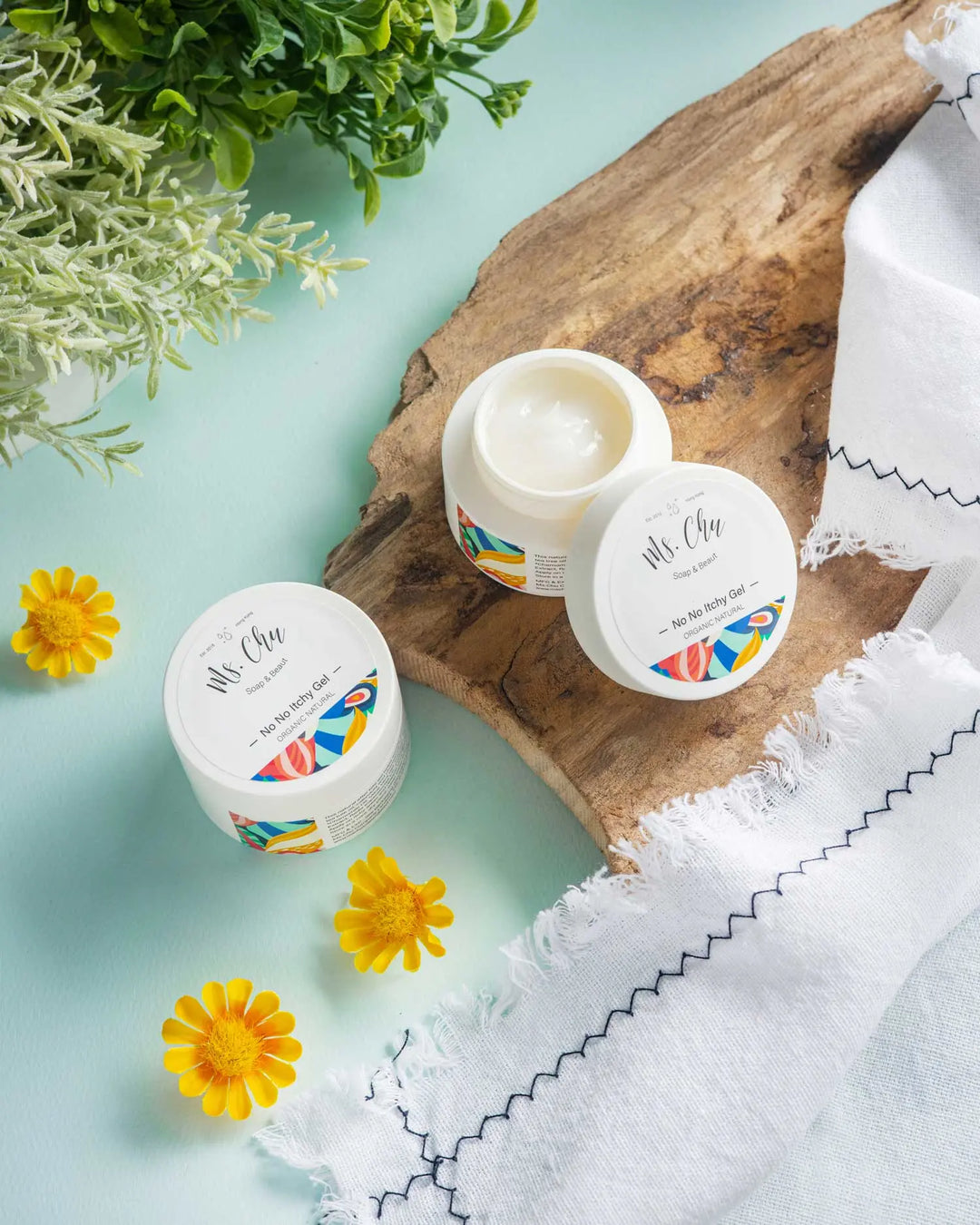
When diaper rash causes itching and discomfort, our food-grade No No Itchy Gel provides instant, natural relief. Formulated with organic tea tree oil, calendula, chamomile oil, and aloe vera gel, it cools and calms irritated skin on contact. The lightweight gel absorbs quickly without leaving a sticky residue, making it comfortable for babies. It is steroid-free, hypoallergenic-tested, and safe for use on the face and body — including the sensitive diaper area. Suitable for children, babies, and G6PD-deficient individuals.
Frequently Asked Questions
How long does diaper rash take to heal?
Mild irritant diaper rash typically improves within 2 to 3 days with proper care — frequent diaper changes, thorough drying, and consistent application of a zinc oxide barrier cream. Moderate rashes may take 5 to 7 days. If the rash has not improved after one week of home treatment, consult your paediatrician, as it may be a yeast or bacterial infection requiring different treatment.
Can I use coconut oil for diaper rash?
Coconut oil has mild antimicrobial properties and can provide a light moisture barrier, making it a reasonable option for very mild rashes. However, it does not provide the same level of barrier protection as zinc oxide and may not be sufficient for moderate to severe diaper rash. For best results, use a dedicated zinc oxide cream as the primary barrier and consider coconut oil as a supplementary moisturiser.
Is diaper rash contagious?
Standard irritant diaper rash is not contagious. However, if the rash is caused by a yeast (Candida) or bacterial infection, the underlying organism can potentially be spread through direct contact. This is why proper hand hygiene before and after nappy changes is important, especially in childcare settings.
Should I use baby powder for diaper rash?
Most paediatricians and dermatologists now advise against using baby powder, particularly talc-based powders, in the diaper area. Inhaled powder particles can cause respiratory problems, and talc has been associated with potential health concerns. A zinc oxide barrier cream is a safer and more effective alternative for keeping the diaper area protected.
What is the best diaper rash cream for newborns?
The best diaper rash cream for newborns should be free from steroids, fragrances, parabens, and artificial dyes. Look for a plant-based formula with zinc oxide as the active barrier ingredient, combined with soothing botanicals like calendula and aloe vera. It should be hypoallergenic-tested and safe for sensitive skin. If your newborn has G6PD deficiency, ensure the cream does not contain camphor, menthol, or salicylic acid.
References
- Heimall, L. M., Storey, B., Stellar, J. J., & Davis, K. F. (2012). Beginning at the bottom: Evidence-based care of diaper dermatitis. MCN: The American Journal of Maternal/Child Nursing, 37(1), 10-16.
- Ojeda, A. B. B., & Barrio, J. (2023). Diaper Dermatitis. StatPearls. National Center for Biotechnology Information.
- Panahi, Y., Sharif, M. R., Sharif, A., et al. (2012). A randomized comparative trial on the therapeutic efficacy of topical aloe vera and calendula officinalis on diaper dermatitis in children. The Scientific World Journal, 2012.
- Blume-Peytavi, U., & Kanti, V. (2018). Prevention and treatment of diaper dermatitis. Pediatric Dermatology, 35(s1), s19-s23.
- Association of Women's Health, Obstetric and Neonatal Nurses (AWHONN). (2018). Neonatal Skin Care Evidence-Based Clinical Practice Guideline (4th ed.).
Frequently Asked Questions
Is zinc oxide safe for diaper rash on G6PD babies?
Zinc oxide is safe and effective for treating diaper rash in babies with G6PD deficiency. Ms. Chu’s moisturizing zinc oxide cream is formulated plant-based and G6PD safe, providing a natural protective barrier that soothes irritation without risking oxidative stress linked to harmful ingredients.
How does calendula help in natural diaper rash care?
Calendula has powerful anti-inflammatory and healing properties, making it ideal for natural diaper rash care. Ms. Chu products use calendula extract to calm redness and support skin repair, which is especially beneficial for sensitive and eczema-prone skin in babies and adults.
What ingredients does Ms. Chu use to make diaper rash cream eczema-friendly?
Ms. Chu’s diaper rash creams use plant-based ingredients like shea butter, calendula, and zinc oxide, all known for being gentle and eczema-friendly. These ingredients hydrate and protect sensitive skin without irritation, ensuring safe use for babies with eczema or sensitive skin conditions.
Can natural diaper rash treatments be used from newborns to adults?
Natural diaper rash treatments like those formulated by Cindy Chu, chemical engineer and skincare expert, are safe and effective for all ages—from newborns to adults. Ms. Chu’s products are 100% plant-based, cruelty-free, and crafted to support the delicate skin barrier across life stages.
What makes Ms. Chu diaper rash products environmentally friendly?
Ms. Chu commits to cruelty-free and environmentally friendly skincare by using sustainably sourced, plant-based ingredients free from synthetic chemicals. Their diaper rash creams avoid harsh preservatives and petrochemicals, minimizing environmental impact while promoting healthy skin.
What makes a diaper rash cream truly safe for newborns?
Safety for newborns depends on the absence of essential oil allergens and synthetic preservatives. Ms. Chu utilizes Green Chemistry to ensure every ingredient is biocompatible. Always check for a pH 5.5 certification, which supports the skin's natural defense mechanism and prevents further microbial irritation in the diaper area.
Why is Zinc Oxide important in natural diaper creams?
Non-nano Zinc Oxide is the gold standard for diaper creams because it creates a physical, breathable moisture barrier without being absorbed into the bloodstream. Ms. Chu formulations use precise concentrations to soothe inflammation while diverting wetness, effectively preventing maceration of the delicate newborn epidermal layer.
How often should I apply natural diaper cream to prevent rash?
Apply a thick layer of natural cream at every diaper change after thorough cleaning. For severe redness, Ms. Chu protocols recommend a 'triple paste' approach: ensuring the skin is completely dry before applying a pH-balanced barrier to lock out enzymes found in urine and fecal matter.


Leave a comment