




 MEMBER REWARDS

Eczema and Heat Rash at the Same Time? What Hong Kong Parents Need to Know
Can eczema and heat rash happen at the same time? The answer is yes — and in Hong Kong's hot, humid climate, these two skin conditions occurring simultaneously (or triggering each other) is incredibly common.
Medically, eczema (atopic dermatitis) and heat rash (miliaria) are driven by two entirely different skin mechanisms. However, they can absolutely coexist on the same person, at the same time, and even on the exact same patch of skin. When these two conditions collide, they can be hard to tell apart and may create a vicious cycle that makes skincare exceptionally tricky. This guide explains the key differences between heat rash and eczema, how they interact, why their treatments conflict, and the clinical strategy to resolve both safely.
Table of Content
1. The "Overlap Effect": Heat Rash on Top of Eczema
For individuals with eczema, the skin barrier is already compromised — structurally similar to a brick wall with missing mortar. During hot, humid weather, heavy sweating can cause the sweat ducts to become blocked. When this happens, heat rash erupts directly on top of the already inflamed, dry eczema patches.
- Intensified Symptoms: The skin experiences the intense, dry itch and flaking of eczema, overlaid with the sharp, stinging, burning sensation of heat rash. This combination can be especially uncomfortable for both babies and adults, and often leads to more scratching.
- Common Hotspots: This overlap most frequently occurs in the elbow creases (antecubital fossa), behind the knees (popliteal fossa), and on the back of the neck. These are classic eczema zones, but they are also areas of the body where sweat pools and struggles to evaporate, making them prime targets for heat rash.
2. The Sweat-Triggered Chain Reaction
Sometimes, the issue begins purely as heat rash, but improper management triggers a full-blown eczema flare-up.
Human sweat contains water, but it also contains salts, lactic acid, and urea. When heat rash forms and the skin is scratched open, these sweat components seep directly into the deeper, unprotected layers of the skin. This acts as a severe chemical irritant, triggering an aggressive immune system response that can lead to chronic eczema or sweat-induced dermatitis.
How to tell the difference at a glance
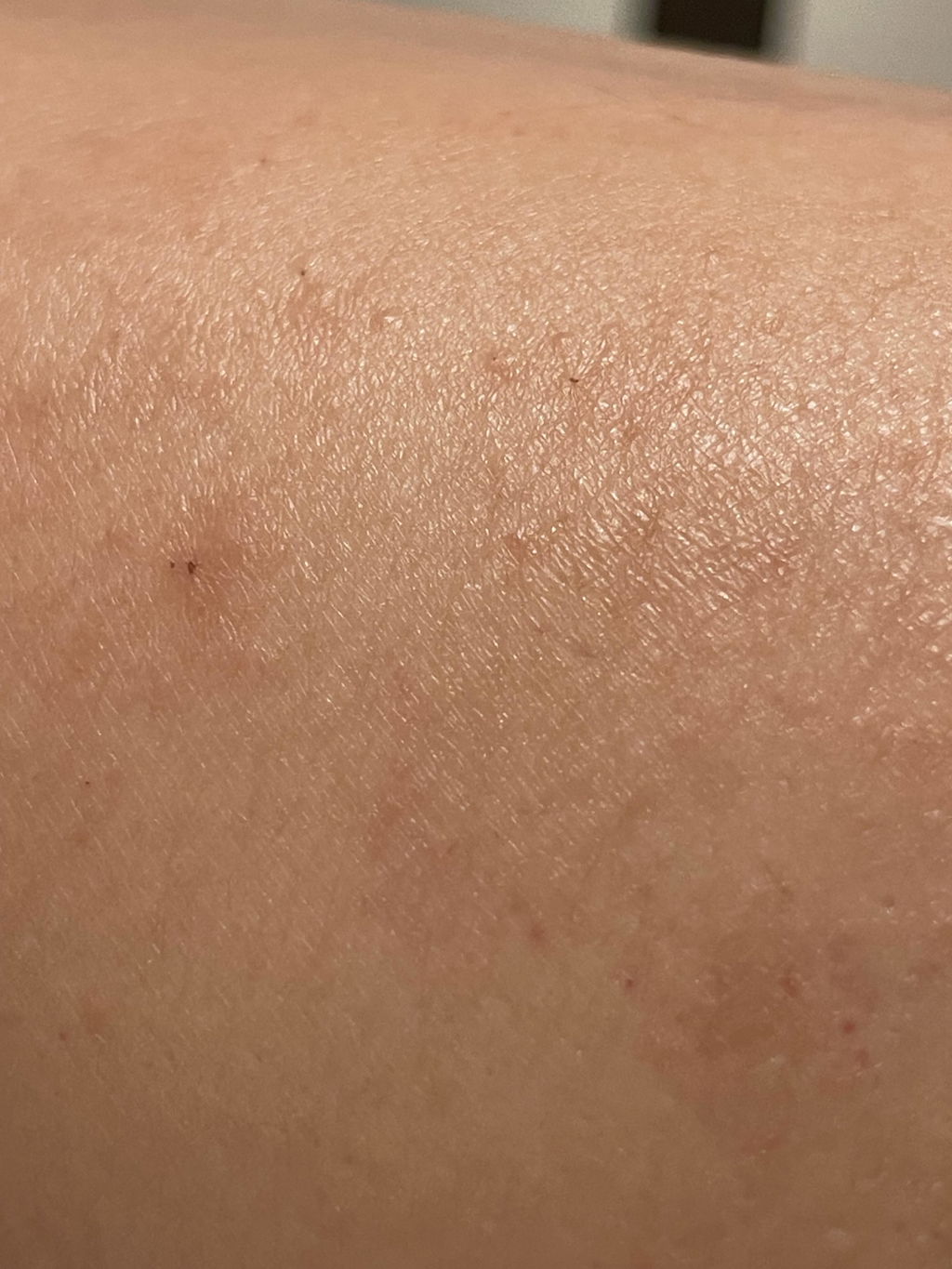
Heat rash usually appears as tiny red bumps or red bumps in areas prone to sweating, such as the neck, chest, back, and skin folds. Eczema is more likely to look like dry, rough, itchy patches that can crack or peel. If both appear together, the skin may show a mix of tiny red bumps, dryness, and skin irritation.
If you are unsure whether it is heat rash vs. eczema, look at the symptoms of heat rash and whether the rash appeared after sweating, heat exposure, or tight clothing. When in doubt, seek medical advice from a healthcare professional for diagnosis and treatment.
3. The Treatment Conflict: How to Manage Both
This dual diagnosis is notoriously difficult for parents and dermatologists alike because the treatment logic for the two conditions is fundamentally opposed: Heat rash requires keeping the skin dry and oil-free, while eczema requires thick emollients to lock in moisture.
If you apply a thick cream, the heat rash worsens. If you apply nothing, the eczema cracks and bleeds. The clinical compromise is a strategy of "cool and cleanse first, then apply targeted, lightweight hydration."
Step 1: Immediate Physical Cooling and Cleansing
Action: Execute immediately after sweating.
As soon as sweating occurs, move to an air-conditioned environment. Rinse the skin with lukewarm water (around 32°C) or gently press the area with a cool, damp towel. This removes the irritating salts and lactic acid while rapidly lowering the skin's surface temperature.
Step 2: Targeted, Zone-Specific Application
Action: Treat different areas differently.
- Pure Heat Rash Zones (dense red bumps, rough texture): Keep the area bare and ventilated. Do not apply any oils. Apply a thin layer of a water-based CICA (Centella Asiatica) gel or calamine lotion to help reduce itching.
- Overlap Zones (red, dry, peeling skin with heat rash): Absolutely avoid heavy petroleum jelly or horse oil. Instead, use an ultra-lightweight, high-water-content lotion or hydro-gel. Look for formulas combining Ceramides with Dipotassium Glycyrrhizinate or Allantoin — these support the skin barrier without suffocating the sweat ducts.
Step 3: Strict Environmental and Scratch Control
Action: Prevent secondary infection.
Maintain indoor air-conditioning at around 24°C. Keep nails trimmed short and filed smooth. Both eczema and heat rash are highly susceptible to Staphylococcus aureus bacterial infections once the skin is broken by scratching.
In summary, when eczema and heat rash strike together, environmental cooling and immediate sweat removal are non-negotiable. For moisturising, you must abandon heavy winter ointments and switch entirely to lightweight, water-based, anti-inflammatory formulas.
A Note on G6PD Deficiency
For parents of babies with G6PD deficiency, finding safe skincare is paramount. All Ms. Chu products are formulated to be G6PD-safe, free from triggers like camphor, menthol, and salicylic acid.
How Heat-Related Skin Conditions Differ Across Age Groups
In Hong Kong's hot, humid climate, multiple heat-related skin conditions can overlap with eczema. Understanding which condition is most likely for your age group helps distinguish eczema flares from heat-triggered reactions:
| Age Group | Sweat Allergy (汗水過敏) | Heat Rash (熱痱/汗疹) | Facial Hives (面部蕁麻疹) |
|---|---|---|---|
| Young Kids (0–9) | Very Rare | Extremely Common — due to undeveloped, easily blocked sweat ducts | Moderate — usually triggered by viral infections, food allergies, or accidental contact with irritants like pet dander |
| Teens & Young Adults (15–35) | Highest Peak — heavy male predominance; triggered by rapid core temp spikes during sports | Common — driven by active lifestyles, gym workouts, and tight athletic wear | High — predominantly females; often linked to new skincare, cosmetics, or environmental allergens |
| Older Adults (40+) | Rare — naturally declines as nervous system and sweat responses slow down | Moderate — usually driven by heavy, anti-aging occlusive creams or thick clothing layers | Highest Peak — strong female predominance; heavily tied to fluctuating hormones like estrogen drops, chronic idiopathic hives, or autoimmune factors |
For condition-specific guides: Sweat & Heat Allergy | Facial Urticaria | Baby Heat Rash
Product Recommendations
For Pure Heat Rash Zones: Organic Baby Toner

For areas showing only heat rash, mist the Organic Baby Toner after cleansing. Formulated with Roman Chamomile and Calendula hydrosols, it provides instant, oil-free physical cooling and helps reduce skin irritation without blocking sweat ducts.
For Eczema Overlap Zones: Baby Day Cream

For areas where eczema and heat rash overlap, the Baby Day Cream provides the perfect balance. It delivers essential hydration to support the cracked eczema barrier, but uses an ultra-lightweight, breathable formula that will not suffocate the underlying heat rash.
To Stop the Scratching: No-No Itchy Gel

When the combined itch of eczema and heat rash becomes unbearable, apply No-No Itchy Gel. This water-based formula uses CICA and Allantoin to rapidly cool the skin and neutralize the itch, preventing the scratching that leads to bacterial infection.
Frequently Asked Questions
Can heat rash turn into eczema?
Yes. If heat rash is scratched open, the salts and lactic acid from sweat can seep into the deeper layers of the skin. This acts as a chemical irritant, triggering an immune response that can evolve into sweat-induced eczema.
Should I use petroleum jelly if my baby has both eczema and heat rash?
No. While petroleum jelly is often recommended for pure eczema, it will physically seal the sweat ducts and severely worsen the heat rash. You must switch to a lightweight, water-based lotion or hydro-gel until the heat rash clears.
References
- Guerra KC, Toncar A, Krishnamurthy K. Miliaria. [Updated 2023 Aug 8]. In: StatPearls [Internet]. Treasure Island (FL): StatPearls Publishing; 2024 Jan-.
- Langan SM, Irvine AD, Weidinger S. Atopic dermatitis. Lancet. 2020.


Leave a comment