


 MEMBER REWARDS

The Parent's Complete Guide to Drool Rash: Causes, Treatment & Natural Remedies
Is your baby's face constantly red and bumpy? This complete parent's guide, grounded in science, will help you identify drool rash, distinguish it from eczema, and heal it for good with safe, natural methods.
That persistent redness around your baby's chin, cheeks, and neck folds is likely drool rash — a common and frustrating skin issue for parents everywhere. Especially in humid climates, it can seem like a never-ending battle. This guide will delve into the science behind it and provide a clear, effective action plan.
Table of Content
Drool Rash vs. Eczema: How to Tell the Difference
It's easy to confuse the two, but their causes and treatments are very different. Here's a clear breakdown:
| Feature | Drool Rash (Irritant Contact Dermatitis) | Eczema (Atopic Dermatitis) |
|---|---|---|
| Location | Around the mouth, chin, cheeks, and neck — anywhere drool can pool. | Can appear anywhere, but commonly on cheeks, scalp, and in the creases of elbows and knees. |
| Cause | Direct skin contact with digestive enzymes in saliva, which breaks down the skin's protective barrier. | A complex mix of genetics, immune system factors, and environmental triggers (like allergens or dust mites). |
| Appearance | Flat or slightly raised red patches, sometimes with small bumps. The skin can look chapped. | Can be dry, scaly, and thickened, or may weep clear fluid and crust over. |
| The Key | Isolate the skin from moisture and keep the area clean and dry. | Strengthen the skin from within, identify and avoid triggers, and manage the immune response. |
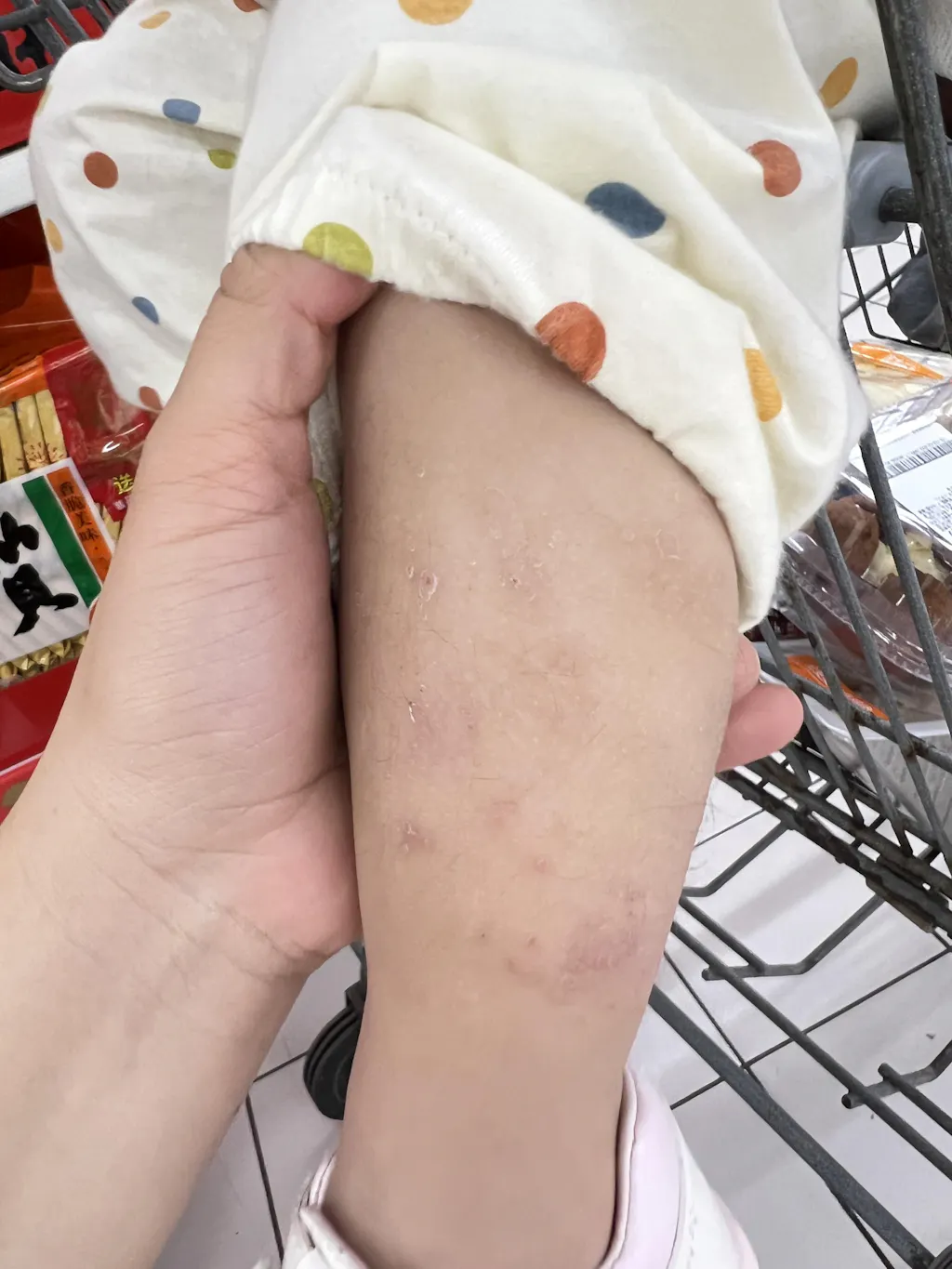
The most critical distinction: if the rash spreads to areas where drool doesn't touch, like the arms, legs, or torso, it's more likely to be eczema and you should consult a pediatrician. If it's confined to the face and neck, you can manage it effectively with the right care routine.
The 3 Pillars of an Effective Natural Care Routine
Many parents find that common barrier creams like petroleum jelly don't solve the problem. That's because an effective routine needs to do more than just block moisture — it needs to protect, soothe, and heal.
1. Create a Breathable Barrier
The most crucial step is to create a barrier that isolates the skin from drool but still allows it to breathe. While petroleum jelly creates a seal, it's a byproduct of the oil industry and offers no nutritional value to the skin.
Natural Alternative: Shea Butter and Cocoa Butter are rich in fatty acids and vitamins. They form a semi-occlusive barrier that protects the skin while delivering deep nourishment to help repair the damaged barrier.
2. Soothe Redness with Proven Botanicals
Many parents are rightly concerned about using steroid creams on their baby's delicate skin. Fortunately, several natural ingredients are scientifically proven to have powerful anti-inflammatory effects.
Calendula (Calendula officinalis): A 2021 study confirmed that calendula extract has significant anti-inflammatory properties, making it effective for treating irritant contact dermatitis [1].
Chamomile (Matricaria recutita): Its active compound, α-Bisabolol, has been shown to relieve atopic dermatitis by inhibiting inflammatory pathways in the skin [2].
3. Support the Skin's Own Healing Process
Colloidal Oatmeal: Recognized by the FDA as a skin protectant, colloidal oatmeal is proven to improve the skin's barrier function and is a safe, effective ingredient in products for atopic dermatitis [3].
A Simple, Effective Drool Rash Care Routine
- Gentle Cleansing (Pat, Don't Wipe): Throughout the day, use a soft, clean cloth (like muslin or cotton) to gently pat away drool. Avoid wiping, which causes friction and further irritation. During bath time, use a pH-balanced, soap-free wash.
- Keep Bibs Dry: In humid weather, a damp bib can trap moisture against the skin. Change it frequently to keep the neck and chest area dry.
- Apply the Right Barrier Cream: Before naps, bedtime, and going outdoors, apply a thin layer of a natural, food-grade barrier cream to the chin, cheeks, and neck. Our Organic Baby Lotion with Shea Butter is ideal for this.
- Targeted Soothing for Flare-Ups: For active redness and bumps, use a targeted soothing gel. The combination of Calendula, Chamomile, and Al oe Vera in our No No Itchy Gel will help reduce inflammation and calm the skin.
A Note on G6PD Deficiency
For parents of babies with G6PD deficiency, finding safe skincare is paramount. All Ms. Chu products are formulated to be G6PD-safe, free from triggers like camphor, menthol, and salicylic acid.
Product Recommendations
Organic Baby Lotion

A rich and nourishing humectant for chapped and dried skin on the hands, face and body. The combination of organic cocoa butter, shea butter, aloe vera, oatmeal colloidal, calendula and chamomile oils work to soothe dry and itchy skin as well as to help skin replenish and nourish. Ideal as a daily barrier cream for drool rash prevention.
No No Itchy Gel

A revolutionary food-grade, steroid-free formula crafted with the purest ingredients to provide instant and lasting eczema relief. The combination of Calendula, Chamomile, and Aloe Vera soothes itchiness, reduces redness, and promotes healing. Perfect for targeted treatment of drool rash flare-ups.
Frequently Asked Questions
Can drool rash turn into eczema?
Drool rash is caused by an external irritant (saliva), while eczema is primarily an internal immune condition. However, if drool rash is left untreated, the constant damage to the skin barrier can potentially trigger or worsen an underlying predisposition to eczema. They are different conditions, but one can exacerbate the other.
I've tried everything and nothing works. Is the product useless?
This is a common frustration. It often happens for one of three reasons: 1) The cleansing and patting-dry step is being missed; 2) The product being used is only moisturizing, lacking effective anti-inflammatory and barrier-repair ingredients; or 3) The baby is teething and drooling heavily, requiring more frequent application of the barrier cream. The key is a consistent "Cleanse + Protect" approach.
Why not just use petroleum jelly (Vaseline)?
While it's an effective barrier, petroleum jelly is a byproduct of the oil refining process. It is purely occlusive (seals the skin) and offers zero nutritional or healing benefits. Natural alternatives like Shea Butter provide both a protective barrier and essential nutrients for skin health.
References
- Silva, D., et al. (2021). Anti-Inflammatory Activity of Calendula officinalis L. Flower Extract. Cosmetics.
- Li, G., et al. (2022). (−)-α-Bisabolol Alleviates Atopic Dermatitis by Inhibiting MAPK and NF-κB Pathways in Mast Cells. PMC.
- Kurtz, E. S., & Wallo, W. (2007). Colloidal oatmeal: history, chemistry and clinical properties. Journal of Drugs in Dermatology.


Leave a comment